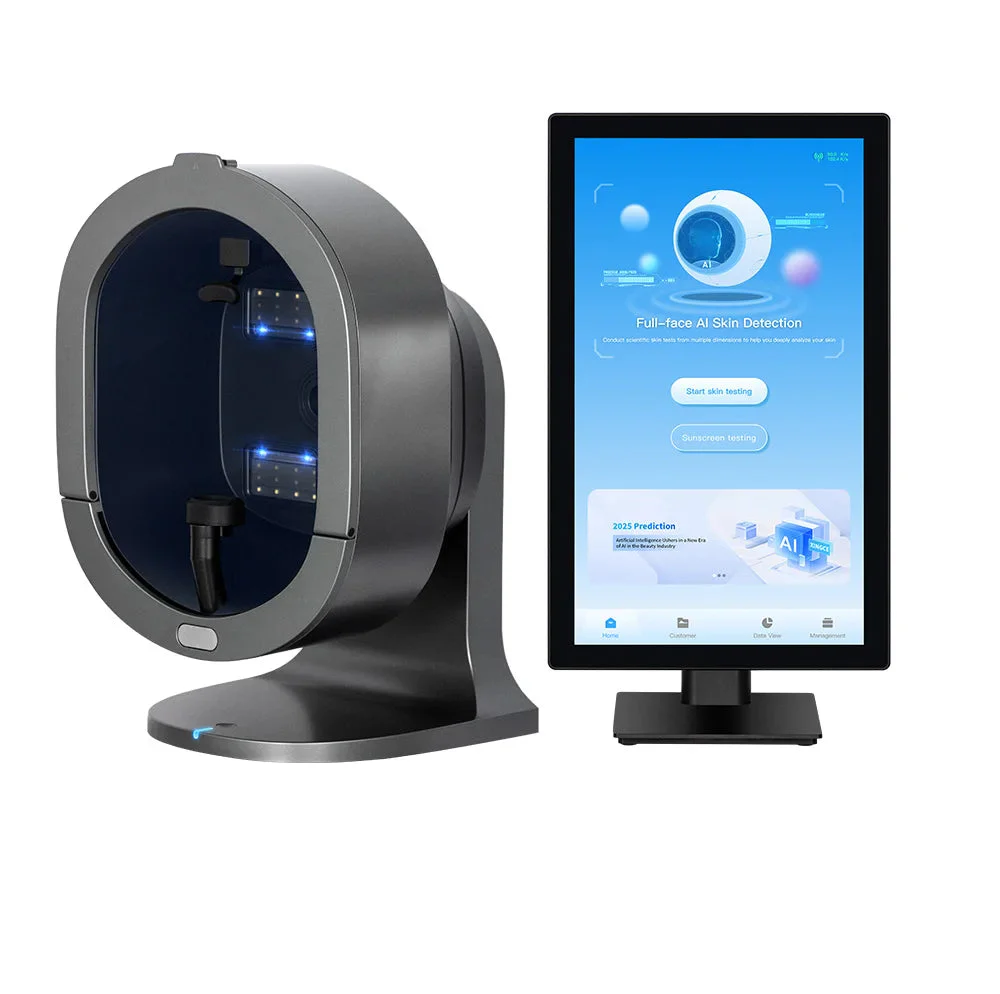
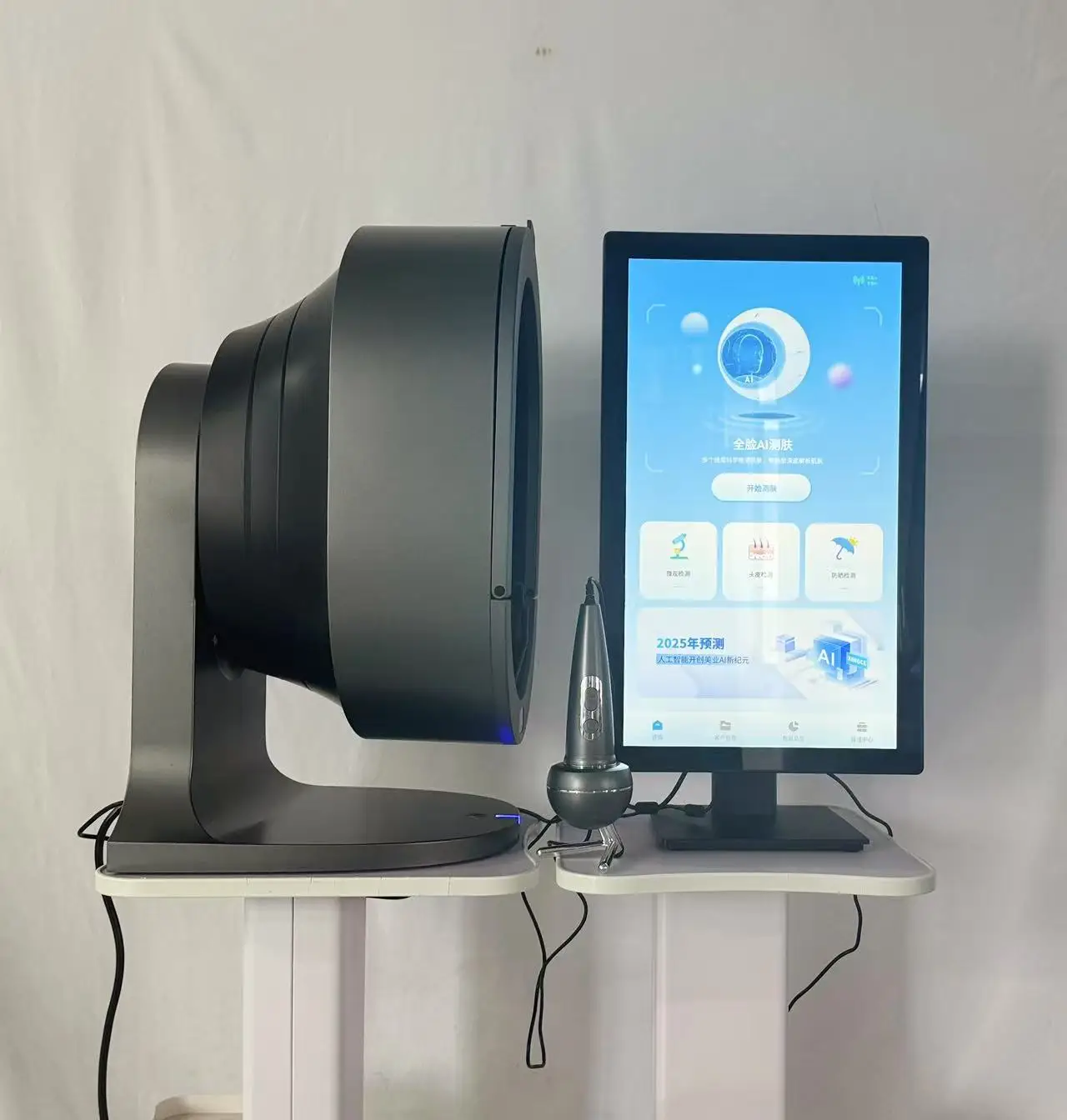
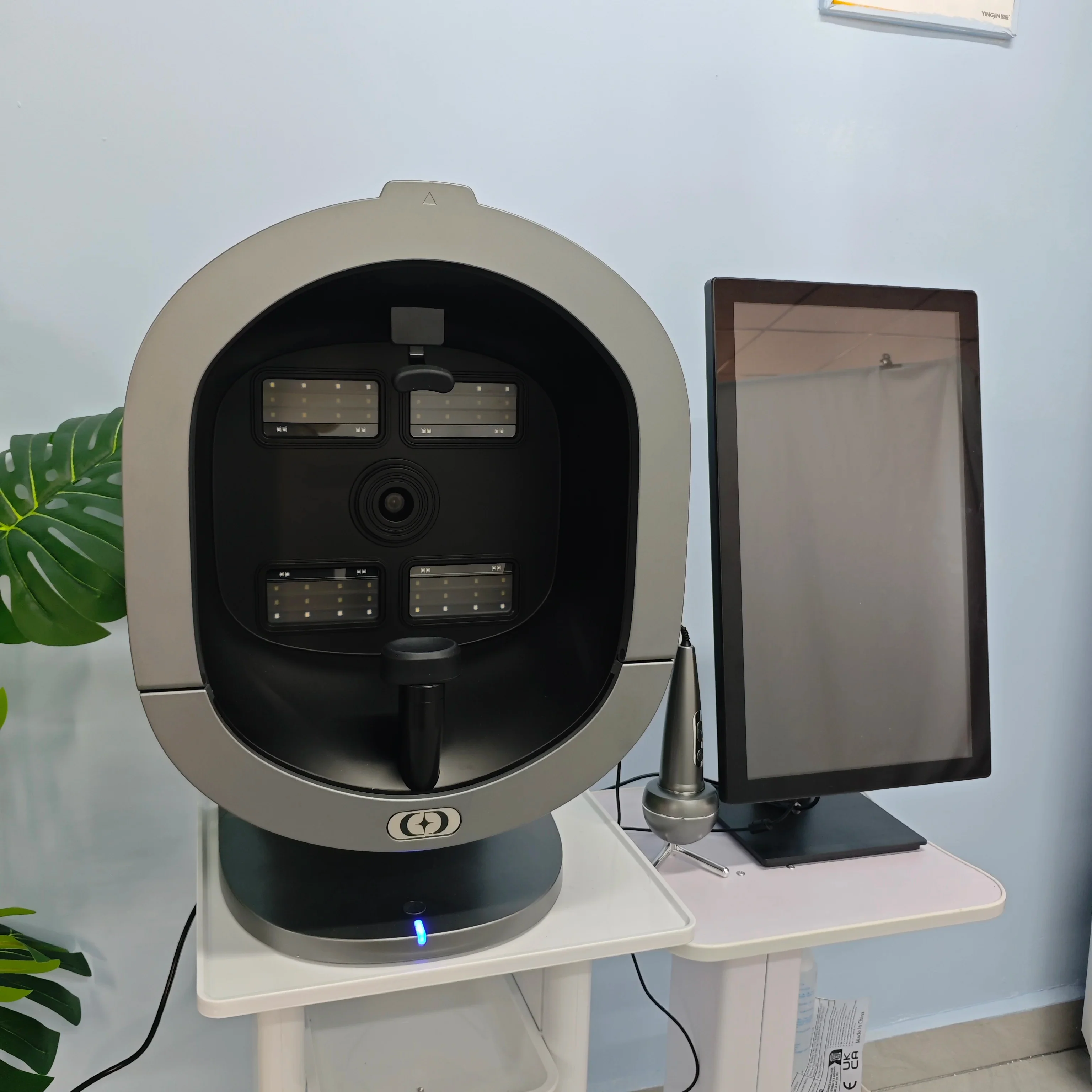
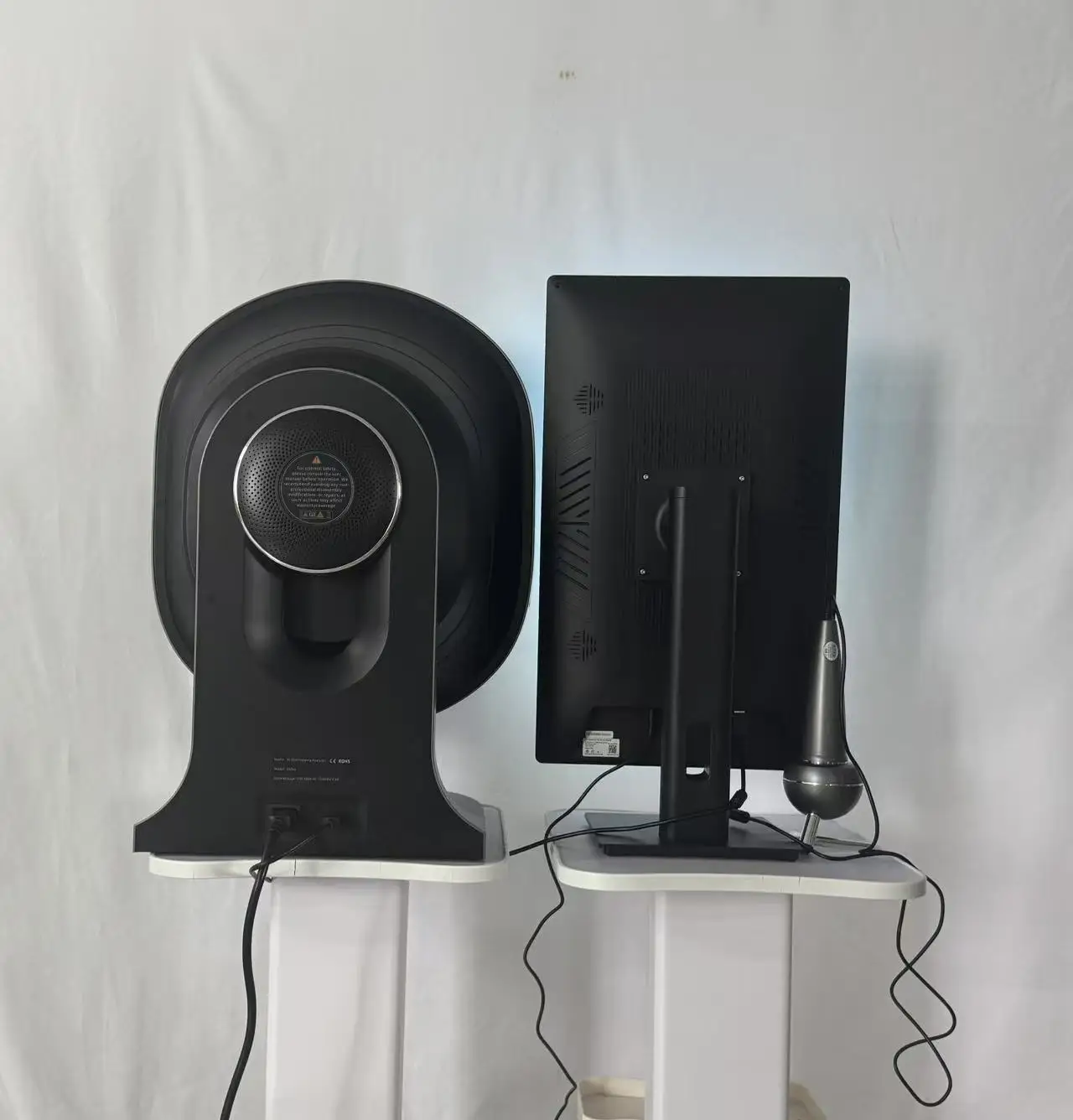
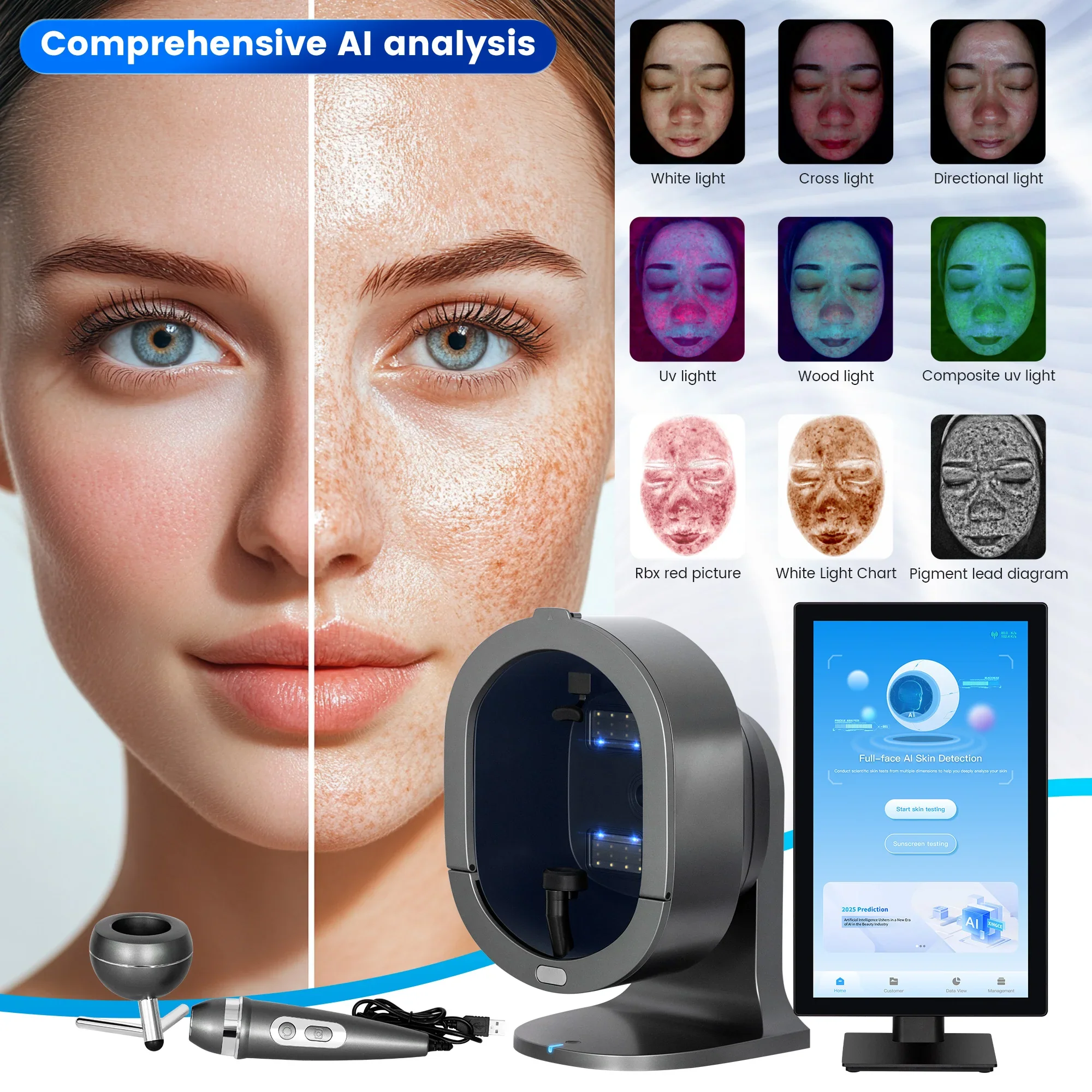

Upgraded X5 3D Ai Skin Image Analyzer High Definition Pixels Whole Facial Scanning Multi Spectrum Moisture Scalp Detection
Upgraded X5 3D Ai Skin Image Analyzer High Definition Pixels Whole Facial Scanning Multi Spectrum Moisture Scalp Detection


The technical principle of skin detectors is based on a variety of optical imaging and sensing technologies, using light of different wavelengths and sensors to detect the state of the surface and deep layers of the skin. The following are common technical principles:
1. Visible light imaging technologyPrinciple: Use white light (visible light) to illuminate the skin and capture the surface details of the skin, such as pores, wrinkles, blackheads, acne, etc.Use: Mainly used to detect epidermal texture, fine lines, surface spots and other problems.
2. Ultraviolet (UV) imaging technologyPrinciple: Use ultraviolet light to illuminate the skin and observe the depth of melanin and skin damage. Ultraviolet light can penetrate the epidermis and show pigmentation and sun spots more clearly.Use: Detect melanin deposition, UV damage, sun spots, deep pigment spots
3. Polarized light imagingPrinciple: Use polarized light to eliminate the reflected light on the skin surface so as to observe the subcutaneous structure more clearly.Purpose: Detect details such as red blood streaks and capillary dilation on the skin surface and deep layers
4. RGB spectral imagingPrinciple: Use red, green and blue wavelengths of light to illuminate the skin respectively. Different wavelengths of light can show different skin conditions.Uses:Red light: Detect deep capillaries and skin blood flow.Green light: Show pigmentation and uneven skin tone.Blue light: Highlight pores and surface details.
5. Multispectral imaging technologyPrinciple: Provide comprehensive skin analysis by simultaneously imaging with light of different wavelengths (visible light, ultraviolet light, infrared light).Use: Can simultaneously analyze multiple problems of the epidermis and dermis, such as wrinkles, acne, spots, pores, sebum secretion, etc.
6. Infrared detection technologyPrinciple: Use infrared rays to penetrate the skin and observe the tissue and moisture content of the subcutaneous layer.Use: Commonly used to detect skin moisture content, subcutaneous inflammatory response, and blood circulation status.
7. Skin resistance and moisture sensing technologyPrinciple: Evaluate the moisture and oil content of the skin by detecting skin resistance. Skin moisture and resistance values are inversely proportional.Use: Used to detect water and oil balance and help determine the dryness or greasyness of the skin.
8. 3D skin imagingPrinciple: By collecting skin images from multiple angles, a 3D image model of the skin is generated to display the three-dimensional form of skin texture, pore depth, and wrinkles.Use: Detect skin texture, large pores, fine lines, and other problems, and provide more accurate analysis results.
9. Fluorescence microscopy technologyPrinciple: Use fluorescent light to illuminate the skin and observe skin metabolites, sebum secretion, and bacterial distribution.Use: Used to detect acne, bacterial infection, and skin barrier damage.
10. Skin age prediction technology (AI technology)Principle: Combining image processing and artificial intelligence (AI) algorithms, analyzing skin conditions based on big data, and comparing with data of peers to predict the "real age" of the skin.Purpose: Determine the degree of skin aging and provide targeted anti-aging solutions.


Core Functions and Effects
|
Function Module |
Detection Content |
Effects |
Applicable Areas |
|
Multi-Spectral Imaging |
Skin moisture, oil, pores, pigment spots, wrinkles, hyperpigmentation |
Visually presents superficial and deep-seated skin issues |
Face, eye area, neck, hands, etc. |
|
AI Intelligent Analysis |
Skin type, oil-moisture balance, skin elasticity, inflammation risk |
Accurately identifies skin type and potential problems |
Full face |
|
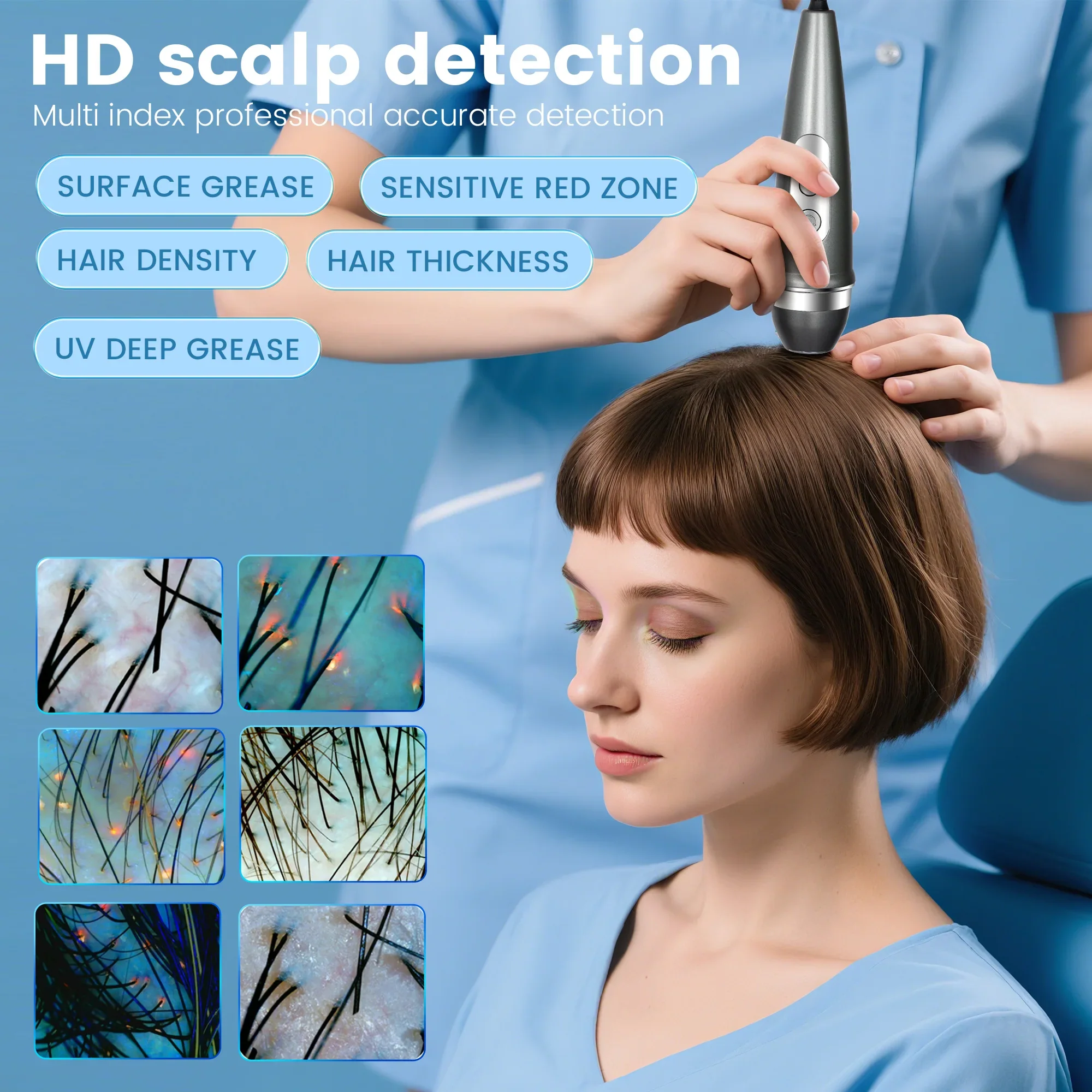
Scalp Detection |
Hair density, hair shaft thickness, scalp sebum, dandruff, hair follicle health |
Evaluates scalp environment and hair loss risk |
Scalp |
|
3D Topographic Analysis |
Skin uneven texture, sagging degree |
Quantifies skin firmness and aging trends |
Full face |
|
Microorganism/Fluorescence Detection |
Skin bacteria, microbial imbalance, fluorescent agent residues |
Analyzes skin microorganisms and external substance residues |
Face, local skin areas |
|
Personalized Solution |
Skincare steps, product recommendations, care cycle |
Provides targeted skincare guidance |
Full face, local skin areas |
|
Data Tracking |
Comparative analysis of multiple detection results |
Monitors improvement effects and adjusts care plans dynamicall |


Function
Comprehensively evaluate skin condition: Help users and professionals understand the health of the skin and identify potential problems.
Personalized skin care guidance: Provide targeted skin care advice to help choose suitable skin care products and care methods.
Early problem detection: Identify fine lines, spots, large pores and other problems in advance to prevent further deterioration of the problem.
Effect tracking: Monitor the effect of skin care programs or beauty treatments and evaluate skin improvement.
Function
Moisture content detection: Measure the moisture content of the skin surface to understand whether there is dehydration or dryness.
Oil secretion detection: Analyze the oil level of the skin and evaluate the oiliness or dryness of the skin.
Pores detection: Observe the enlargement and blockage of pores to help formulate a deep cleansing plan.
Wrinkle and fine line analysis: Evaluate facial texture and wrinkle depth to help formulate anti-aging plans.
Melanin and spot analysis: Detect the distribution of melanin and spots in the skin to prevent pigmentation.
Sensitivity detection: Identify sensitive areas of the skin and judge the health of the skin barrier.
Red blood streak detection: Analyze the dilation of blood vessels in the skin to help alleviate and improve the problem of red blood streak.
Ultraviolet damage detection: Evaluate the ultraviolet damage to the skin and suggest the need to strengthen sun protection.
Acne and blackhead detection: Observe the acne and blackheads on the skin to help formulate an oil control plan.
Skin age assessment: Predict the "actual age" of the skin through comprehensive analysis and judge the aging of the skin.
Intelligent analysis and reporting
Some advanced skin testers can automatically generate test reports and recommend scientific skin care products or care plans for users or beauticians to refer to.


 1.File management module
2.Cloud computing, cloud storage module
3.Surface and deep quantitative analysis module
4.Skin prediction module
5.3D simulation module
6.Problem skin module
7.Comparative analysis module
8.Integrated report module
9.Solution module
10 work modules


Original: $942.00
-65%$942.00
$329.70Product Information
Product Information
Shipping & Returns
Shipping & Returns
Description
Upgraded X5 3D Ai Skin Image Analyzer High Definition Pixels Whole Facial Scanning Multi Spectrum Moisture Scalp Detection
The technical principle of skin detectors is based on a variety of optical imaging and sensing technologies, using light of different wavelengths and sensors to detect the state of the surface and deep layers of the skin. The following are common technical principles:
1. Visible light imaging technologyPrinciple: Use white light (visible light) to illuminate the skin and capture the surface details of the skin, such as pores, wrinkles, blackheads, acne, etc.Use: Mainly used to detect epidermal texture, fine lines, surface spots and other problems.
2. Ultraviolet (UV) imaging technologyPrinciple: Use ultraviolet light to illuminate the skin and observe the depth of melanin and skin damage. Ultraviolet light can penetrate the epidermis and show pigmentation and sun spots more clearly.Use: Detect melanin deposition, UV damage, sun spots, deep pigment spots
3. Polarized light imagingPrinciple: Use polarized light to eliminate the reflected light on the skin surface so as to observe the subcutaneous structure more clearly.Purpose: Detect details such as red blood streaks and capillary dilation on the skin surface and deep layers
4. RGB spectral imagingPrinciple: Use red, green and blue wavelengths of light to illuminate the skin respectively. Different wavelengths of light can show different skin conditions.Uses:Red light: Detect deep capillaries and skin blood flow.Green light: Show pigmentation and uneven skin tone.Blue light: Highlight pores and surface details.
5. Multispectral imaging technologyPrinciple: Provide comprehensive skin analysis by simultaneously imaging with light of different wavelengths (visible light, ultraviolet light, infrared light).Use: Can simultaneously analyze multiple problems of the epidermis and dermis, such as wrinkles, acne, spots, pores, sebum secretion, etc.
6. Infrared detection technologyPrinciple: Use infrared rays to penetrate the skin and observe the tissue and moisture content of the subcutaneous layer.Use: Commonly used to detect skin moisture content, subcutaneous inflammatory response, and blood circulation status.
7. Skin resistance and moisture sensing technologyPrinciple: Evaluate the moisture and oil content of the skin by detecting skin resistance. Skin moisture and resistance values are inversely proportional.Use: Used to detect water and oil balance and help determine the dryness or greasyness of the skin.
8. 3D skin imagingPrinciple: By collecting skin images from multiple angles, a 3D image model of the skin is generated to display the three-dimensional form of skin texture, pore depth, and wrinkles.Use: Detect skin texture, large pores, fine lines, and other problems, and provide more accurate analysis results.
9. Fluorescence microscopy technologyPrinciple: Use fluorescent light to illuminate the skin and observe skin metabolites, sebum secretion, and bacterial distribution.Use: Used to detect acne, bacterial infection, and skin barrier damage.
10. Skin age prediction technology (AI technology)Principle: Combining image processing and artificial intelligence (AI) algorithms, analyzing skin conditions based on big data, and comparing with data of peers to predict the "real age" of the skin.Purpose: Determine the degree of skin aging and provide targeted anti-aging solutions.
Core Functions and Effects
|
Function Module |
Detection Content |
Effects |
Applicable Areas |
|
Multi-Spectral Imaging |
Skin moisture, oil, pores, pigment spots, wrinkles, hyperpigmentation |
Visually presents superficial and deep-seated skin issues |
Face, eye area, neck, hands, etc. |
|
AI Intelligent Analysis |
Skin type, oil-moisture balance, skin elasticity, inflammation risk |
Accurately identifies skin type and potential problems |
Full face |
|
Scalp Detection |
Hair density, hair shaft thickness, scalp sebum, dandruff, hair follicle health |
Evaluates scalp environment and hair loss risk |
Scalp |
|
3D Topographic Analysis |
Skin uneven texture, sagging degree |
Quantifies skin firmness and aging trends |
Full face |
|
Microorganism/Fluorescence Detection |
Skin bacteria, microbial imbalance, fluorescent agent residues |
Analyzes skin microorganisms and external substance residues |
Face, local skin areas |
|
Personalized Solution |
Skincare steps, product recommendations, care cycle |
Provides targeted skincare guidance |
Full face, local skin areas |
|
Data Tracking |
Comparative analysis of multiple detection results |
Monitors improvement effects and adjusts care plans dynamicall |
Function
Comprehensively evaluate skin condition: Help users and professionals understand the health of the skin and identify potential problems.
Personalized skin care guidance: Provide targeted skin care advice to help choose suitable skin care products and care methods.
Early problem detection: Identify fine lines, spots, large pores and other problems in advance to prevent further deterioration of the problem.
Effect tracking: Monitor the effect of skin care programs or beauty treatments and evaluate skin improvement.
Function
Moisture content detection: Measure the moisture content of the skin surface to understand whether there is dehydration or dryness.
Oil secretion detection: Analyze the oil level of the skin and evaluate the oiliness or dryness of the skin.
Pores detection: Observe the enlargement and blockage of pores to help formulate a deep cleansing plan.
Wrinkle and fine line analysis: Evaluate facial texture and wrinkle depth to help formulate anti-aging plans.
Melanin and spot analysis: Detect the distribution of melanin and spots in the skin to prevent pigmentation.
Sensitivity detection: Identify sensitive areas of the skin and judge the health of the skin barrier.
Red blood streak detection: Analyze the dilation of blood vessels in the skin to help alleviate and improve the problem of red blood streak.
Ultraviolet damage detection: Evaluate the ultraviolet damage to the skin and suggest the need to strengthen sun protection.
Acne and blackhead detection: Observe the acne and blackheads on the skin to help formulate an oil control plan.
Skin age assessment: Predict the "actual age" of the skin through comprehensive analysis and judge the aging of the skin.
Intelligent analysis and reporting
Some advanced skin testers can automatically generate test reports and recommend scientific skin care products or care plans for users or beauticians to refer to.
1.File management module
2.Cloud computing, cloud storage module
3.Surface and deep quantitative analysis module
4.Skin prediction module
5.3D simulation module
6.Problem skin module
7.Comparative analysis module
8.Integrated report module
9.Solution module
10 work modules